
CEMI News & Momentum Stories
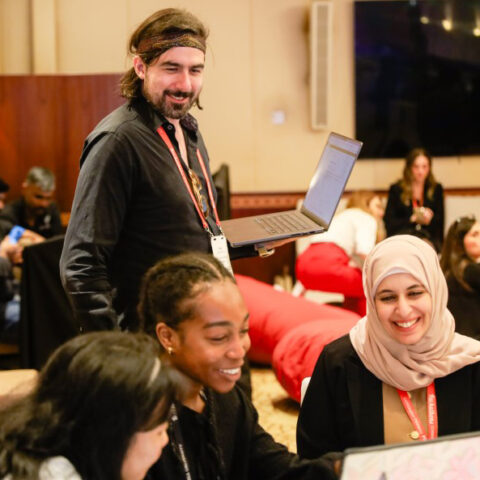
“The whole point of CEMI is to improve the way people experience Cornell’s processes and technology,” said Curtis Cole, Vice President and Chief Global Information Officer, as he kicked off a February 18, 2026 Town Hall on the Cornell Experience Modernization Initiative (CEMI or “See Me”).
For many Cornell community members, CEMI can feel like a system upgrade, but it is a much broader and intentional cultural commitment to reshape administrative processes as well as the technology supporting these tasks.
Measuring Success
Cole emphasized the ultimate measure of CEMI’s success is its outcomes—student success, research impact, alumni engagement, public engagement, and patient care. Improvements to HR, finance, and student systems are essential steps, but the program’s focus extends far beyond software.
“The practical goal is simple: reduce administrative burden so Cornell community members can focus on the work that matters most—advancing the university’s mission,” said Cole.
For daily tasks, CEMI aims to eliminate repetitive data entry, streamline approvals, and reduce the number of disconnected systems users must navigate to accomplish their learning, teaching, research, and work.
Reducing Friction: A New Philosophy of Work
Cole highlighted the human impact of design decisions, noting that even small choices can significantly affect how others move through their day.
He said, “The people who design systems and processes are trustees of other people’s time.”
The goal is to make the right way the easy way—and eliminate unnecessary steps wherever possible. This philosophy, described in The Friction Project authored by two Stanford professors, is a cornerstone of CEMI’s approach.
Some solutions will involve new technology; others may be as simple as improving communication or aligning practices across units. A recent addition is the launch of new “accelerators”—collaborative groups that bring together staff with similar roles to identify shared pain points, share quick fixes, and recommend improvements.
Building a More Connected Cornell
One of Cole’s primary themes was the urgency of unifying Cornell’s fragmented technology ecosystem. Across the university, staff, faculty, researchers, clinicians, and students interact with multiple systems and applications, navigate different logins across campuses, and face hurdles in sharing information. These fragmented systems make collaboration harder, slow down administrative work, and limit the ability to see the full picture of people, processes, and data.
CEMI is making headway through major decisions and investments, including:
- Starting with a new Workday instance for HR, finance, and—eventually—student services (rather than building off the existing Workday used in Ithaca)
- Selecting Kindsight Ascend to support donor and engagement needs for all university locations
- Selecting Informatica and Boomi to support Cornell’s needs for unified data and analytics
- Mapping the paths students take from applying to graduating and beyond to improve current systems and inform future strategies
- Extending Salesforce to serve as the university-wide engagement system
- Improving how logins, directories, and more work across university locations
- Evaluating the existing applications that support HR, finance, and procurement processes
The guiding philosophy—“as common as possible, as different as absolutely necessary”—balances Cornell’s diverse local needs with the institutional need for consistency and connection.
Learn More and Stay Involved
Watch the full Town Hall recording, including the question and answer session.
Stay updated about CEMI through upcoming town halls, newsletters, and ongoing opportunities to join focus groups, discovery sessions, and accelerator teams.

Cornell’s CEMI initiative is reshaping how the university works by simplifying processes, reducing friction, and creating a more connected experience for students, faculty, and staff.
In his Town Hall on Wednesday, February 18, 2026, Cornell Vice President and Chief Global Information officer (CGIO) Curtis Cole described how the program is bringing clarity to long‑standing administrative challenges while empowering teams to design better, more intuitive workflows. With major system upgrades underway and new opportunities for community involvement, CEMI is laying the foundation for a smoother, more unified Cornell.
Access those webinar recording using your campus login:
- Weill Cornell Medicine New York and Qatar: CEMI Webinar 2/18/2026
- Cornell Ithaca and Tech CEMI Webinar 2/18/2026
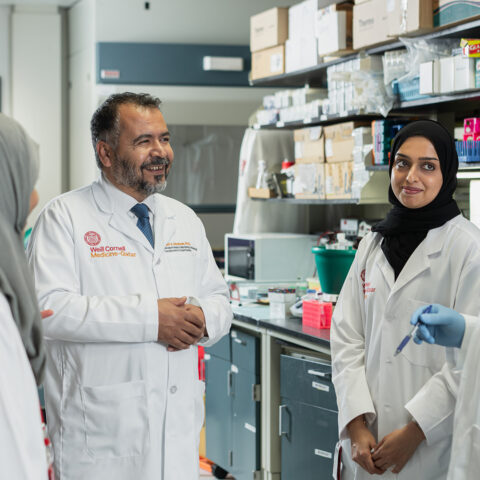
Before committing to the Cornell Experience Modernization Initiative (CEMI or “See Me”), university leaders conducted readiness activities in Fall 2024. The results confirmed that Cornell community members are not only open to changing the status quo—they’re eager for it.
Not only have Cornell community members discovered new ways to accomplish their tasks, they are open to changing their approach. In their own words, participants at every campus expressed their dedication and pride in being part of the university’s mission and in their own work:
- Mission-Driven Commitment
Across all campuses, people are deeply dedicated to Cornell’s mission and ready to support it in every way they can. - Pride in Their Work
Individual pride in daily tasks fuels the university’s broader success. Community members see their roles as essential to Cornell’s achievements. - Everyday Innovation
Innovation thrives at every level. People are quick to recognize when tools fall short—and just as quick to create better ways of working. - Openness to Change
Despite Cornell’s long-standing traditions, stakeholders expressed genuine excitement about simplifying systems and improving the digital experience for everyone.
CEMI Teams Work in Tandem
Many Cornell’s community members are engaged in parallel activities designed to help prepare for and implement the new processes and tools introduced through CEMI.
In addition to working on a single system to unify every campus’s core administrative workflows and data in human resources, finance, budget, and eventually student services, and a shared a shared Customer Relationship Management (CRM) system, CEMI teams are analyzing the many processes and applications that are used to connect legacy systems and get work done. For example, a common login is the focus of the Identity Management team.
Current teams and team members can be found in the Functional Area pages and more opportunities to participate are coming in 2026.
Brainstorm and Suggest Ways to Work Easier or Faster
Think about the current processes and systems you use on a daily, monthly, or annual basis and list your ideas for improvement. Don’t hesitate to identify bottlenecks or gaps that need to be addressed.
Brainstorm with teammates about what might be done differently if more modern tools and technologies were available. Submit group and individual suggestions to the CEMI Program team. Offer to participate in an activity or team that matches your interest and availability. If time is limited, join a one-time focus group to test a design or process iteration.
Look for the Contact Hub link on the Get Involved page to submit ideas and join the CEMI participants.
Introducing CEMI
Learn more about CEMI in the other stories in this series.
- CEMI 101: What is the Digital Experience?
- CEMI 102: Streamlining Broadly Used Systems
- CEMI 103: Modernizing the Cornell Digital Experience
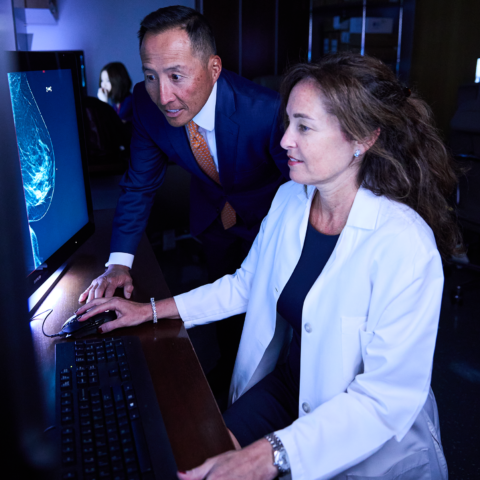
The Cornell Experience Modernization Initiative (CEMI or “See Me”) began with a push to streamline overlapping technology systems across campuses. After a year of community input and a six-month assessment by Huron consultancy, a 2025 report confirmed Cornell was ready—technologically and culturally—to unify and modernize the digital tools and systems that shape daily life on every campus.
Cornell community members will hear three phrases used frequently in CEMI discussions: modernize, digital experience, and new tools and best practices. Each represents a key component of improving the way everyone uses technology to accomplish their work and further their learning on a daily basis.
Modernize
Modernization means adopting today’s best tools and practices to support Cornell’s mission. It involves updating legacy and end-of-life systems and streamlining processes to work more efficiently across the university.
The Digital Experience
Every Cornell community member interacts with digital systems—whether registering for classes, managing research, or accessing services. These touchpoints form a shared digital experience that spans campuses and roles.
Using New Tools and Best Practices
Teams across Cornell are reviewing old processes and exploring new solutions. By aligning with current best practices in various areas such as information technology, education, research and administrative and clinical operations, they’re shaping a more connected, user-friendly digital environment for everyone.
Shaped by the Cornell Community
CEMI is building a strong foundation for smarter tools, better processes, and a more connected experience for students, faculty, staff, patients, donors, and researchers. In fact, community members know the current processes and systems best—and what it’s going to take to change and harmonize how we do things on each campus.
Look for the contact hub link on the Get Involved webpage to suggest improvements, add your process insights, volunteer for an activity, or join the mailing list.
Introducing CEMI
Learn more about CEMI concepts in the next article in this series, CEMI 104: Imagine Working Easier or Faster

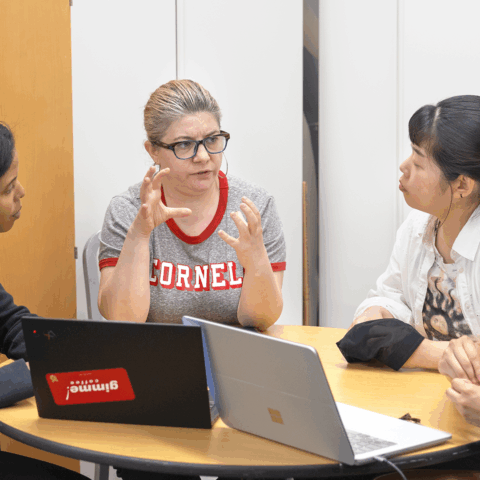
Cornell community members depend on many different technology tools to complete their routine tasks. In fact, the CEMI program’s technical team has identified over 1,000 systems and applications used across the university’s campuses.

Broadly used systems are technical solutions that many researchers, faculty, staff, students, and clinicians rely on to complete their daily tasks in areas like administration, finance, human resources, and engaging with alumni, donors, and patients. These systems also provide data used by Cornell leaders to make strategic decisions.
The data in these systems are disconnected, making it difficult to produce timely reports which are necessary when responding to challenges and opportunities. Streamlining these broadly used systems and making reporting more efficient is one of the goals for CEMI.
Five Types of Broadly Used Systems
To unify and simplify how work that supports the university’s mission is accomplished, the Cornell Experience Modernization Initiative (CEMI or “See Me”) is exploring five broadly used systems:
- Data and Analytics for unified campus reporting. This will not only meet an urgent need, but it will help us identify problems that we hope to address in the new solution.
- Enterprise Resource Planning (ERP) systems such as Kuali/KFS, Jenzabar, PeopleSoft, SAP, SuccessFactors, and Workday. Each of these has a related ecosystem of supporting systems for specialized functions like procurement or financial aid.
- Customer Relationship Management (CRM) systems like Slate and Salesforce. These are being examined as possible tools for filling gaps or improving the experience of a new unified system.
- “Gap Apps” or smaller ERP or CRM adjacent solutions that have developed over time to fill functions that should be in the core systems but were missing or not optimal at the time these systems were adopted.
- Identity Management for unified access to services that require Cornell login across our major campuses. For example, Ithaca and Cornell Tech use NetIDs while Weill Cornell Medicine’s campuses use CWIDs, which they share with New York Presbyterian and Columbia. This is a very complex problem with important security and usability implications.
Many other systems and tools will be evaluated in the CEMI analysis—such as pre-award research administration, Microsoft 365 email, Amazon Web Services, and cloud storage solutions—but they are not the primary focus of the initial CEMI analysis.
Introducing CEMI
Learn more about CEMI concepts in the first article in this series, CEMI 101: What is the Cornell Digital Experience?
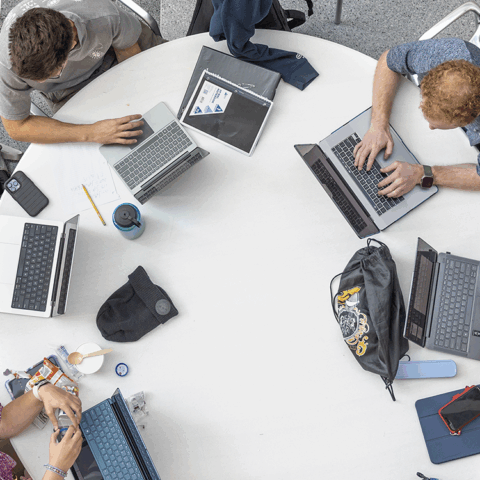
Across Cornell, the digital experience is everything on a screen that a community member interacts with to get things done. That experience extends to all the systems and applications and data that drive what a community member sees or does on their screen.
The Cornell Experience Modernization Initiative (CEMI or “See Me”) is a community-driven effort to improve the digital experience for everyone who uses technology to accomplish their work and further their learning on a daily basis. CEMI strives to unify and improve the university’s systems and processes to better serve our entire community—faculty, researchers, clinicians, students, staff, alumni, partners, and donors.
By creating more efficient and user-friendly experiences, CEMI will enable our community members to focus on what matters most: advancing Cornell’s mission.
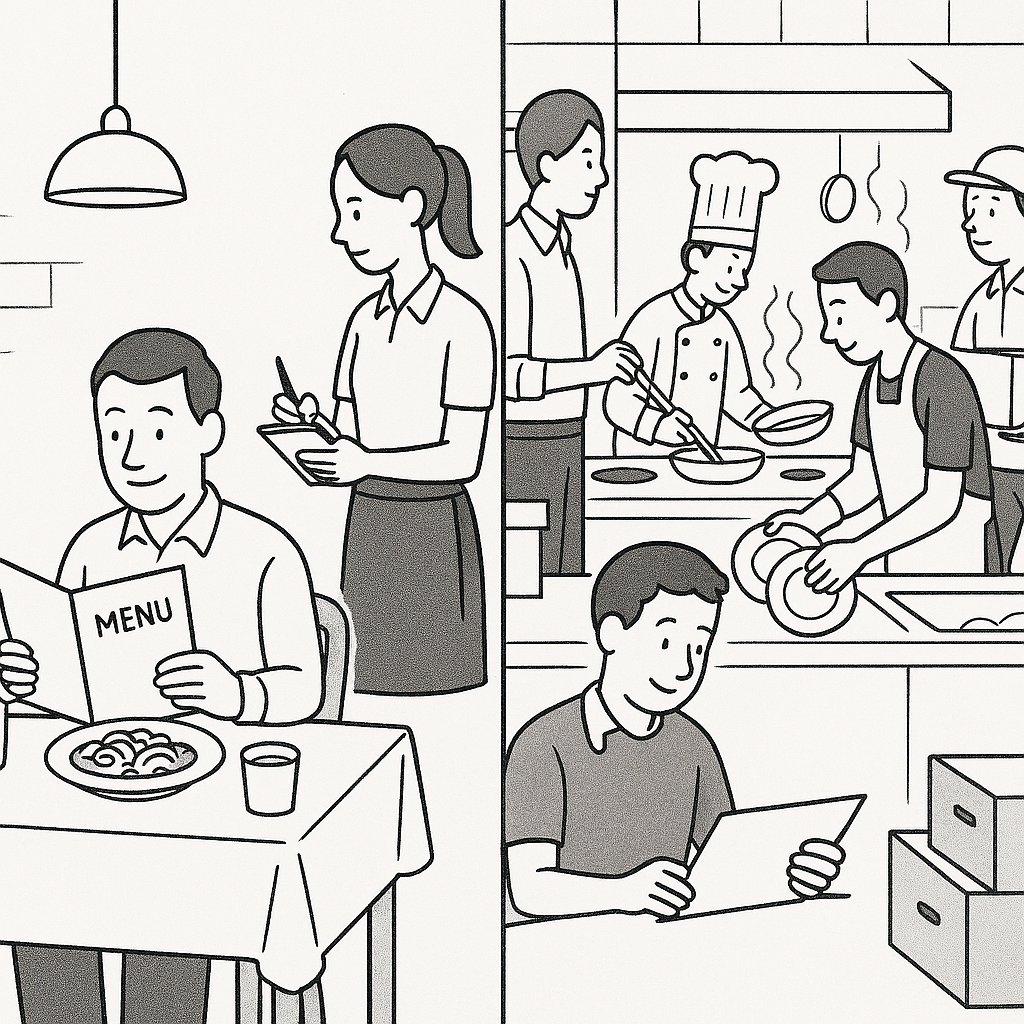
Behind the Scenes in a Digital Experience
Imagine going to your favorite restaurant. You sit down, browse the menu, place your order, and enjoy a delicious meal. That’s your experience as a diner—what you see, smell, taste, and interact with directly.
But behind the scenes, there’s a much bigger system at work: servers taking orders, chefs preparing dishes, dishwashers cleaning up, and suppliers delivering fresh ingredients. All of these roles and processes contribute to your overall dining experience, even if you never see them.
In the same way, Cornell’s digital experience isn’t just the apps or websites used to make payments, complete HR activities, interact with alumni, or register for classes. It includes all the systems that help community members manage data, support students, donors, and patients, and keep everything running smoothly. Each person may only see the front end, but a whole “digital kitchen” is actively working behind the scenes to make it all possible.
Getting Rid of the Big Red Tape
Cornell’s current digital experience is composed of over 1,000 separate and often duplicate systems, applications, and data collection tools. Individually, each component was chosen and customized to streamline work for one or more colleges, schools, or business units. Unfortunately, several decades of individual additions resulted in a layered bureaucracy that now hampers the university’s ability to quickly assess and address challenges, opportunities, and priorities as they arise and shift.
Eliminating that digital bureaucracy, or Big Red Tape, is one of the goals of CEMI.
Introducing CEMI
Learn more about CEMI concepts in the next article in this series, CEMI 102: Streamlining Broadly Used Systems.

Working as One: In the November 2025 webinar, Cornell’s Chief Global Information Officer Curtis Cole addressed the breadth of the CEMI transformation and emphasized its multiple phases and initiatives, including the selection of Workday for HR, budget, and finance, with an expected go-live of summer 2028.
The implementation of the Workday system is only the first of multiple initiatives and solutions that will each be critical to achieving an environment where everyone using administrative processes and systems at Cornell can work as one. Cole said, “Our goal is to make work easier for everyone. We want everybody spending less time on administration and more time on the stuff that really matters: our actual mission. We want people to have the data they need to make decisions, and a much easier chance of working with one another. Making it easier for faculty to collaborate, easier for students to use the power of the whole university. To do that, we’ve got to get rid of these administrative barriers. And hopefully that will give us an enhanced experience for everyone. You’ll get a new computer interface, better access to information, fewer barriers, and fewer complex processes to get your work done. That’s the goal we’re going to push for.”
To achieve the goal of working as one, the CEMI transformation includes design teams, readinness initiatives, and other activities that support one or more funcational focus areas: budget, data and analytics, donor and experience engagement, finance, HR, research administration, and student services, plus a techical focus team that is working on the infrastructure needed to link all those functions. More information about each of those areas of focus and their teams can be found in the CEMI website. The CEMI working groups and teams continue to form and expand. See ways to get involved with CEMI, ask a question, or be added to the CEMI Community mailing list for quarterly updates and invitations to webinars.
Access the November 12, 2025 webinar recording using your campus login:
- Cornell Ithaca and Tech: CEMI Webinar 11.12.2025
- Weill Cornell Medicine New York and Qatar: CEMI Webinar 11.12.2025

We are pleased to announce that Workday has been selected and approved as the technology foundation for Cornell’s unified solution to manage the core administrative functions of finance, budget, human resources, research, and student services. This is a major milestone in the Cornell Experience Modernization Initiative (CEMI), achieved through the deep engagement, insights, and expertise of people throughout the university, at all locations, to select the solution that would best support our collective work both now and in the future.
More than 200 Cornell community members from Ithaca, New York City, and Doha leveraged those insights to define the Request for Proposal (RFP) requirements and evaluate potential solutions. Their final decision reflects thoughtful deliberation and a shared commitment to identifying the best technical foundation to meet Cornell’s unique needs.
The collaborative effort reflects Cornell’s deep commitment to modernizing core business processes, improving data transparency, and enhancing operational efficiency across all campuses. This is more than a technology upgrade—it’s a step toward realizing the vision of One Cornell, where shared goals and aligned systems support a more connected and responsive university.
Workday provides a robust, cloud-based solution already proven at research universities with medical schools and supports CEMI’s guiding principle: to align administrative processes and data to be as common as possible, as different as absolutely necessary. This approach ensures consistency across the university in our administrative practices and processes, while accommodating differences found to be essential to preserve.
As we move forward into the next phase of CEMI, preparing for implementation, we will continue to build from the excellent foundation you and your teams have established in the selection process. We appreciate your ongoing support and guidance. We’re sending this announcement to everyone who has been working with us on CEMI so far, as well as the IT leadership teams. Please share with your teams as you see fit.

Curt Cole and Chris Cowen
Cornell community members who previously registered for a CEMI Webinar should receive an email invitation to register for future webinars. Eager to register before receiving your email? Use the link to sign up now with your campus email for the November 12, 2025 presentation.

Opening with a video introduction by Cornell University President Michael I. Kotlikoff, the Summer 2025 Cornell Experience Modernization Initiative (CEMI or “See Me”). Following the president’s message, Cornell’s Chief Global Information Officer Curtis Cole shared several recent accomplishments including a newly reorganized effort to align contributor experiences across campuses: the Donor and Engagement Experience Project (DEEP). a unified identity program, functional leadership selection and team formation, and new CEMI communication channels. Cole also answered questions from the audience and continued to encourage more participation in various activities by community members at all levels of the university.
To access the recording, please choose the link based on your login:
- Cornell Ithaca and Tech: CEMI Webinar Recording 7.30.2025
- Weill Cornell Medicine New York and Qatar: CEMI Webinar Recording 7.30.2025